
“North Korea Is Adopting Universal Global Standards in Historical and Cultural Heritage”
- Mar 23
- 3 min read
Updated: May 18

An analysis has found that North Korea has been adopting universal global standards in the field of historical and cultural heritage since the leadership of General Secretary Kim Jong Un began. It was also pointed out that preparations such as adopting an international perspective and building archives are necessary for future inter-Korean exchanges and cooperation in historical and cultural heritage.
The North Korea Development Institute, with support from the Unification and Sharing Foundation, held a seminar on March 11 at the education center of the National Museum of Korea under the theme “Historical and Cultural Heritage in the North: Finding Paths to Restoration—Opening Inter-Korean Cooperation through Technological Development and Content Production.”
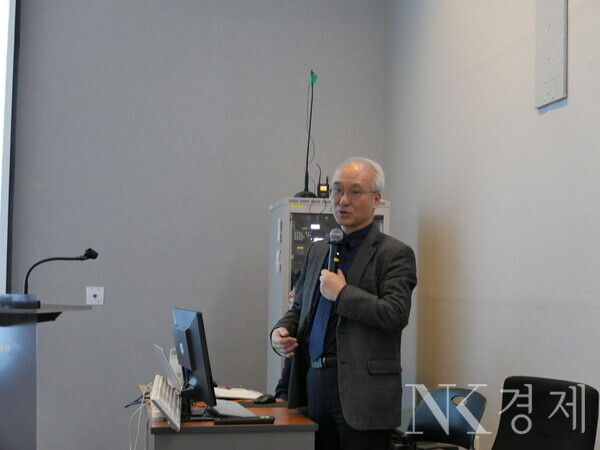
At the seminar, Jung Chang-hyun, director of the Peace Economy Institute, delivered the first presentation under the topic “Status of Historical and Cultural Heritage in North Korea.”
Jung stated, “Since the launch of the Kim Jong Un leadership, two characteristics have emerged in North Korea’s national heritage sector,” adding, “First, it is accepting universal global standards. Recently, North Korea has been conducting surveys and excavations of cultural heritage in the Kaesong area with support from countries such as France and Germany.”
He continued, “The second characteristic is the emphasis on intangible heritage,” explaining that “various elements are being registered as intangible heritage, and for those of global significance, efforts are being made to register them internationally.”
He also noted that North Korea is attempting to develop historical heritage in connection with the tourism industry. Historical temples in the eastern coastal region have been restored, which appears to be linked to tourism zones such as Mount Kumgang, Wonsan-Kalma Coastal Tourist Area, and Masikryong Ski Resort.
It was also introduced that North Korea interprets history and assigns value to national heritage centered on Pyongyang and the Taedong River. North Korea regards Gojoseon and Goguryeo as having their centers in Pyongyang, and accordingly assigns earlier national treasure numbers to related heritage sites.
Jung analyzed that North Korea is making more definite efforts to preserve national heritage compared to the period of the “Arduous March.” He stated that North Korea’s push for UNESCO World Heritage inscription serves both as political promotion to the international community and as a means to receive international support for preservation and management of national heritage.
He further argued that although inter-Korean exchanges are currently difficult, it is necessary to organize the past 30 years of inter-Korean historical and cultural heritage exchange experiences and build them into archives in preparation for future cooperation.
In addition, he suggested that since North Korea is accepting universal global standards, there should be approaches to inter-Korean heritage issues from a broader international perspective of cooperation and exchange.

Following this, Kim Yeo-myeong presented on “NK Open Finder and the Digitalization Project of Maps from the Japanese Colonial Period.” Kim is jointly conducting research and development of NK Open Finder with the North Korea Development Institute.
NK Open Finder is a project that digitizes surveying and heritage data of North Korean regions from the Japanese colonial period and matches them with current Google Maps. Through this, it enables the identification of locations of historical and cultural heritage sites in North Korea.
This is expected to serve as foundational data for future inter-Korean heritage exchange and cooperation, as well as for the potential return of overseas Korean cultural assets to North Korea.
Source: NK Economy


Comments