
How Does North Korea View the 'Iran War'?
- May 11
- 8 min read
North Korea has shown no particular reaction to the military actions taken by the United States and Israel against Iran. On the 1st, the North Korean Ministry of Foreign Affairs issued a statement declaring that "the fact that the United States' military threats against Iran would lead to an actual military invasion had already been within the range of foreseeable predictions," condemning the "shameless rogue behavior" of the U.S. and Israel in the strongest terms. However, the statement offered no public expression of support for Iran, nor did it mention U.S. President Donald Trump by name — a response largely consistent with North Korea's reaction to the limited U.S.-Israeli airstrikes on Iran in June of last year.

(Pyongyang Rodong Sinmun) — North Korean Workers' Party General Secretary Kim Jong-un observing the test launch of strategic cruise missiles from the 5,000-ton destroyer "Choe Hyon", conducted on the 4th.
Since then, North Korea has shown no further reaction to the Iran situation. Internal political events — such as rallies to implement the goals set at the 9th Congress of the Korean Workers' Party held last month, and study sessions on Party resolutions — are proceeding quietly. On the same day the Ministry of Foreign Affairs statement was issued, General Secretary Kim Jong-un visited the Sangwon Cement Factory — not a military unit — and delivered a speech emphasizing economic construction. On March 8th, he attended an International Women's Day event together with Politburo members and their spouses.
Of course, North Korea is closely monitoring the ramifications of the Iran situation as it evolves into a prolonged conflict, and is analyzing this "military operation" from multiple angles. In particular, the specific execution of the U.S. so-called "bloody nose strike," as well as Iran's counter-operations in response, are expected to provide North Korea — which finds itself in a similar position — with significant analytical material and strategic insights. This is because hypothetical scenarios may differ considerably from how events actually unfold.
North Korea is expected to conduct detailed analysis of the following: the overall structure of U.S. military operations; the effectiveness of air defense assets against hypersonic missiles; the utility of relatively low-cost drones; the extent of underground fortification destruction caused by U.S. bombing; and the impact of Iranian strikes on U.S. military bases in neighboring countries.
Since the September 11, 2001 terrorist attacks, the tactics most frequently employed by U.S. forces against authoritarian states or terrorist organizations have been the "bloody nose strike" — a deep-penetration precision strike against key command structures — and the "decapitation operation" targeting only the enemy's leadership. These two operations, conducted under the concepts of "preventive war" and "preemptive strike," are at times pursued simultaneously.
A representative example was the U.S. military operation against Venezuela in January of this year. U.S. stealth fighters, including the F-22A Raptor and F-35A, neutralized air defense systems, while B-1B strategic bombers devastated fortifications. Simultaneously, special operations helicopters of the 160th Special Operations Aviation Regiment (160th SOAR) infiltrated the Venezuelan capital and succeeded in apprehending President Maduro.
Such operations were carried out in a manner similar to the small-scale preemptive strike scenarios considered during Trump's first term for dismantling North Korea's nuclear program — scenarios that continue to be rehearsed annually on the Korean Peninsula. The most representative example is the U.S.-South Korea special operations exercise "Teak Knife." Once conducted in secrecy, this exercise was publicly disclosed under the Yoon Suk-yeol administration in an unprecedented move. Last year as well, a series of joint special operations exercises were carried out: a combined special strike exercise in March, a combined Marine Corps logistics exercise in July, and a maritime infiltration exercise in August.
In response to these U.S.-South Korea military exercises, North Korea has consistently condemned them as "a blatant nuclear war rehearsal thoroughly aimed at using nuclear weapons against our state" and "the most comprehensive and aggressive invasion war exercise."
In that context, U.S. "bloody nose" and "covert operations" targeting Iran represent no entirely new situation for North Korea. For over a decade, North Korea has publicly disclosed counter-scenarios in response to U.S. military operations such as decapitation operations, preventive wars, and preemptive strikes.
Regarding decapitation operations, North Korea defines them as "operations in which the U.S. takes over Pyongyang and eliminates the leadership to prevent the use of nuclear weapons and strategic rockets (missiles)." In response, North Korea has stated that "world-class special operations forces are prepared and will enter preemptive retaliatory operations." North Korea has continuously released footage through state media of General Secretary Kim Jong-un observing combat training exercises targeting the Blue House (Cheong Wa Dae) conducted by special operations battalions directly subordinate to KPA Unit 525. According to South Korea's Defense White Paper, the Korean People's Army (KPA) operates approximately 200,000 special forces personnel.
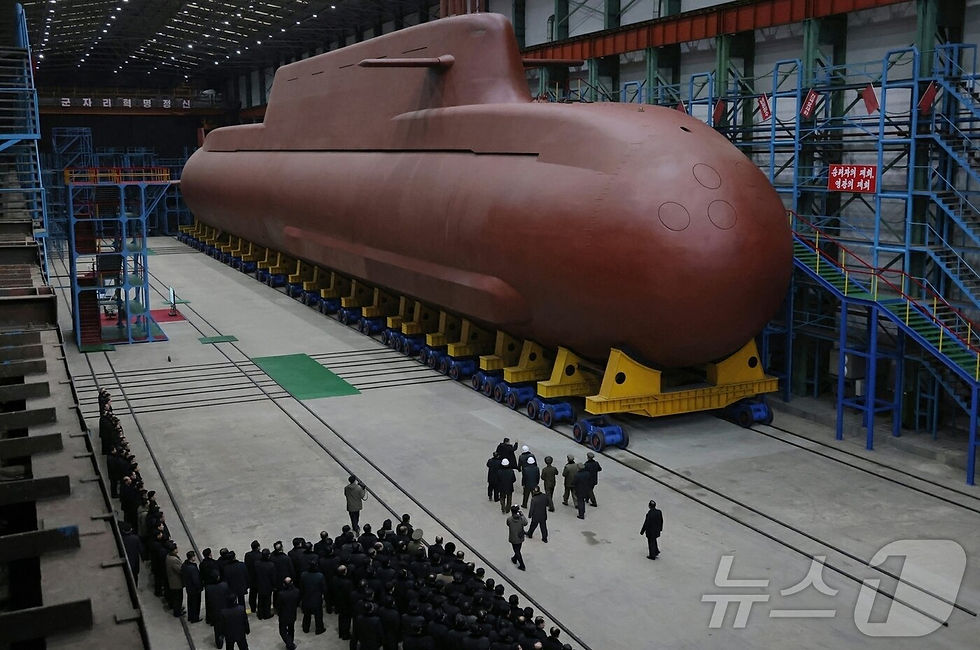
North Korea has also publicly articulated its countermeasures whenever the U.S. has raised the concepts of "preventive war" and "preemptive strikes." North Korea defines a preventive war as "an aggressive war concept aimed at striking North Korea's nuclear and rocket bases to preemptively eliminate threats to the United States." It has warned that should the U.S. attempt a preventive war against North Korea, Pyongyang will "respond with an all-out war," adding that "a variety of nuclear strike means with the U.S. mainland within range are in readiness."
Regarding "preemptive strikes" — defined as "preemptively eliminating imminent and serious enemy threats" — North Korea openly threatens that such strikes are "not the exclusive property of the United States," asserting that North Korea too is capable of conducting preemptive strikes. The KPA General Staff, which commands military operations in a manner equivalent to South Korea's Joint Chiefs of Staff, has gone even further, threatening to "turn the ROK Army's 1st and 3rd Field Armies, including Seoul, into a sea of fire."
North Korea has publicly stated that even the slightest movement of forces and equipment deployed for decapitation operations would trigger an immediate preemptive response, and has recently hinted at the possible use of tactical nuclear weapons. North Korea's declared primary strike targets are the Blue House and governing institutions; secondary targets are U.S. military bases in the Asia-Pacific region and the U.S. mainland.
North Korea is also paying close attention to "covert operations" — those aimed at organizing protest movements to achieve regime change. North Korea characterizes U.S. covert operations as having been "applied in Iraq and Libya," and defines them as operations aimed at "infiltrating the North, sowing confusion, and combined with psychological warfare, collapsing North Korea's system." North Korea emphasizes that, unlike other countries, it maintains "single-hearted unity" centered on the Supreme Leader, making U.S. covert operations ineffective. A case that publicly demonstrated the difficulty of conducting covert operations inside North Korea was also disclosed, albeit in a different context of infiltration.
On September 5, 2025, The New York Times reported that ahead of the February 2019 Hanoi U.S.-North Korea Summit, U.S. Navy special forces infiltrated the East Sea coast in an attempt to install a newly developed CIA eavesdropping device inside North Korea. Upon being detected by local civilians, the operatives killed them and retreated.
In recent years, North Korea has been upgrading its response capabilities against U.S. military operations, with nuclear weapons at the center. The most representative example is the "Comprehensive Tactical Nuclear Counterattack Exercise" conducted for the first time in April 2024. North Korea is evolving from a stage of testing and training focused on the performance, operation, and tactics of nuclear and missile weapon systems to a stage of tactically integrating nuclear weapons, multiple rocket launchers, and missiles in comprehensive operational exercises. The stated rationale was a response to the U.S.-South Korea Air Force combined formation exercises, the deployment of U.S. nuclear strategic assets to the Korean Peninsula, and U.S.-South Korea special forces combined airborne infiltration training.
In response, South Korea and the United States have conducted three rounds of the "Iron Mace" nuclear-conventional integration (CNI) tabletop exercise (TTX), tailored to the North Korean nuclear threat, from August 2024 through last year.
At the 9th Party Congress — which concluded just before the U.S. airstrikes on Iran — North Korea declared that the Korean Peninsula and surrounding region are in a state of constant instability and escalating tensions, stating: "The fact that if one is weak, one becomes a victim of sanctions and aggression, and ultimately has one's sovereignty and territory seized, is the reality that the international community sees through today's harsh geopolitical situation and the lesson it is made to reflect upon." This emphasized security through strength and balance of power. North Korea also summarized the key contents of a new five-year national defense development plan.
"This (national defense development plan) will include: a more powerful land- and submarine-launched intercontinental ballistic missile complex synthesizing accumulated technologies; various artificial intelligence unmanned attack complexes; special assets for attacking enemy satellites in contingencies; highly powerful electronic warfare weapon systems for paralyzing the enemy's command center; and further advanced reconnaissance satellites." — General Secretary Kim Jong-un, Korean Workers' Party

This reveals that even before the Iran crisis erupted, North Korea had already established national defense strengthening objectives with the development and operation of various tactical nuclear retaliatory means in response to preventive war and preemptive strikes — as well as preparation for electronic warfare and information warfare — firmly in mind. Indeed, on the 3rd and 4th of this month, North Korea consecutively launched strategic cruise missiles from the new 5,000-ton destroyer "Choe Hyon", signaling the "nuclearization of the Navy." This represents North Korea's intention to complete a "second-strike nuclear capability" — the ability to immediately retaliate at various levels against the enemy even if Pyongyang or the leadership comes under attack.
North Korea also publicly revealed its objective to significantly enhance the density and sustainability of concentrated strikes — and thereby further strengthen the core dimension of its war deterrence — by incrementally increasing deployments of 600mm multiple rocket launchers, new-type 240mm multiple rocket launcher systems, and "operational-tactical missile complexes" as the primary strike means for deterring the South Korean theater.
North Korea's new national defense plan will sequentially trigger corresponding security responses from South Korea. Nonetheless, some analysts argue that while the military competition and confrontation between the two Koreas — driven by provocation and security threats — has turned the Korean Peninsula into "the most dangerous powder keg," the paradox is that the fear of destruction has actually reduced the likelihood of war.
James Walsh, Senior Research Associate at MIT's Security Studies Program (SSP) — who has personally visited Iran and North Korea and directly discussed nuclear issues with officials there — recently assessed the current Korean Peninsula situation as a kind of "defensive equilibrium" in an interview with Hankyoreh. He analyzed that "paradoxically, a stable equilibrium point is now forming on the Korean Peninsula," describing it as "a situation that is not bad — one in which the possibility of war has decreased and countries surrounding the Peninsula are focused on their own issues." The actual risk of war has been significantly reduced through a "balance of terror."
With no clear end in sight for the Iran situation, South Korea and the United States are conducting their regular first-half combined exercise "Freedom Shield" (FS) through the 19th of this month. At South Korea's request, the exercise scale has been reduced by approximately half compared to last year.
Particular attention is being paid to North Korea's level of response. In the past, North Korea has condemned every FS exercise as "an invasion rehearsal against the North" and launched missiles in protest. Some observers raise the possibility that North Korea may engage in high-intensity provocations — such as an intercontinental ballistic missile (ICBM) launch — to deliberately antagonize the United States while it is fully preoccupied with Iran, or to create confusion in U.S. readiness posture.
However, given that North Korea announced "proportional response" as its consistent policy at the 9th Party Congress, and that the Supreme People's Assembly (SPA) delegate elections are scheduled for the 15th, followed by a convening of the SPA to discuss constitutional amendments, it is expected that North Korea will calibrate its level of response accordingly. With the U.S.-China Summit scheduled for late March, it appears unlikely that North Korea — which designated economic construction as its top priority at the Party Congress — would choose to escalate military tensions by provoking President Trump and President Xi Jinping at this juncture.
Source: “Reading North Korea” column by Jung Chang-hyun (News1)
Jung Chang-hyun Director of the Peace Economy Institute
He completed his graduate studies in Korean history at Seoul National University. He served as a senior reporter at the Institute of Contemporary History of JoongAng Ilbo. He also served as an adjunct professor at Kookmin University and University of North Korean Studies, and as an advisory committee member of the National Archives of Korea.


Comments